


Transfer students have become a lifeline for many institutions trying to maintain undergraduate enrollments. But resources are often scarce. It’s not unusual for transfer advisors to wear many hats and focus primarily on credit articulation.
But is that good enough?
The Eduventures 2026 Admitted Student Research™ finds that about two-thirds of students who transferred from a community college experienced challenges in the process, and credit transfer was not the top concern for most.
Ready, Or Not?
Eduventures’ most recent Admitted Student Research captures the college decision-making of over 10,000 students who were offered admission to a college for the fall of 2026. Most of these students are high school seniors, but 8% reported transferring from another institution. Almost three-quarters of these transfers previously enrolled at a community college with plans to enroll at a four-year institution (vertical transfers).
These students don’t make decisions on a whim. About half said they always planned to pursue the transfer path, and two-thirds started considering potential transfer schools within their first year at community college. This leaves a lot of time to research, plan, and seek guidance. Yet 65% told us they experienced challenges in the process.
Figure 1 highlights the specific challenges vertical transfer students experienced.
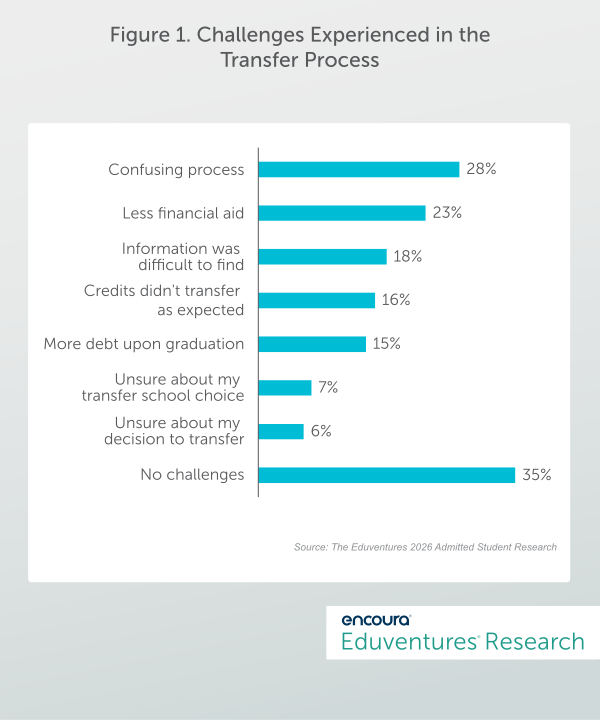
Figure 1.
Vertical transfer students report a wide variety of challenges with the transfer process, but two stand out. Most commonly, they found the whole process confusing (28%), and 18% found information difficult to find. Often, these two challenges were reported in tandem.
This points to concerns beyond credit articulation. More students described the process itself as confusing or reported difficulty finding information than cited problems transferring credits. Another greater concern to many was the loss of expected financial aid, suggesting many institutions have more systemic communication gaps throughout the transfer journey.
If students who have been preparing for years to transfer found the whole experience difficult and confusing, what could have helped?
Been There, Done That, Still Struggled
Interestingly, challenges in the transfer process don’t seem to disappear with experience. About one in five vertical transfer students in our sample indicated that this was not their first time transferring schools. Yet they were just as likely to report challenges as their peers who transferred for the first time.
The bright side? Students who had transferred before were less likely to find the process confusing (18% vs. 30% of first-time transfers), but they experienced greater disappointment with their credit transfer (25% vs. 14%), highlighting the cumulative impact of credit loss across multiple transfers.
This indicates two things. First, students who have transferred before might also face greater retention risk due to credit transfer frustrations. Losing credits a second time means additional time, cost, and frustration — real barriers to degree completion.
First-time transfers, meanwhile, were more likely to be confused about the process despite having previous experience with applying to college. This suggests that transfer admissions differs enough from first-year admissions that institutions cannot assume previous college experience reduces the need for clear communication.
How can we help these students? Transfer students also told us what additional support, in retrospect, would have been helpful to them. Their answers point toward advising needs that extend well beyond evaluating credits (Figure 2).
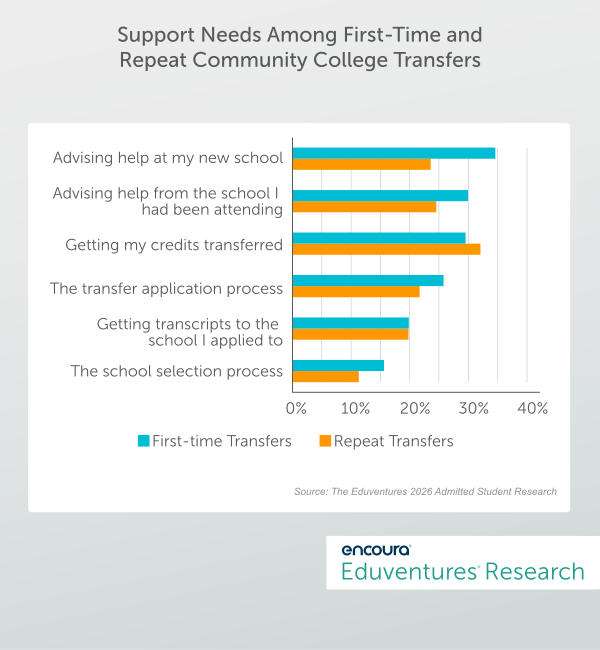
Figure 2.
ing and application help from both their school of origin and (especially) their destination school. This reinforces the need for general transfer advising that goes beyond credit articulation.Repeat transfers, on the other hand, are more focused on the credit transfer process. These students, despite the previous transfer, still came from a community college and likely transferred by using different articulation agreements than they had initially planned for. This credit loss is difficult to address without broader efforts to simplify or standardize credit transfer requirements.
It is important to keep in mind that repeat transfers are often driven by dissatisfaction or a change in circumstances that the school of origin could not accommodate. Aside from addressing credit articulation, transfer institutions should aim to understand the additional challenges and barriers these students have faced. Chances are these constraints still exist, and support will be needed to see these students through to graduation.
The Bottom Line
While transfer advisors are often stretched thin, the good news is that targeted, strategic improvements can go a long way:
- Expand the role of transfer advising. Students' greatest challenges extend beyond evaluating credits. Dedicated transfer advisors who can help students navigate applications, financial aid, deadlines, and institutional processes provide the support students say they need most. Clear, self-service information and tools can address routine questions, allowing advisors to focus on more complex individual situations.
- Financial aid communication deserves more intentional design. Students should not arrive at an enrollment decision surprised by a lower-than-expected aid offer. Proactive, transparent financial aid outreach — early and often — can reduce uncertainty and keep prospects from abandoning the process. Ideally, this would include narrowing the gap between first-year and transfer aid offers.
- The work does not end at enrollment. Students who have transferred before carry the accumulated weight of prior credit loss, institutional transitions, and unresolved life circumstances. Receiving institutions that invest in structured success touchpoints — early advising, degree-mapping check-ins, targeted retention outreach — are better positioned to see transfer students through to graduation.
