


Each December, we ask our analysts to reflect on the past year and share one insight that truly stood out. In Part I, we explore what three of our analysts uncovered as they examined the traditional student demand landscape. From shifting student behaviors that favor in-person interaction to the growing pressure for institutions to own their unique brand identities to the rise of shared enrollment leadership on campus, this year’s reflections underscore the need for institutions to recalibrate toward more intentional, student-centered strategies to meet students where they are.
In Part II, coming next week, we’ll dive into the lessons learned in the graduate market and in program innovation.
Senior Engagement Is Shifting
In 2025, I learned that even in an age of digital recruitment, prospective students are spending more time engaging with institutions in person than they were just three years ago.
Figure 1 shows the pre-application college search activities of high school seniors in 2022 and 2025, revealing a steep drop in website exploration and moderate increases in campus visits and interactions with college representatives.
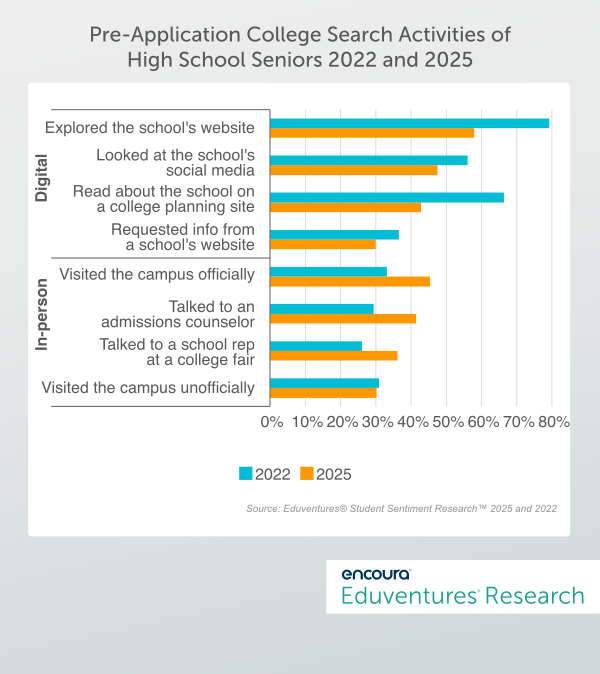
Figure 1.
Does this suggest a recalibration of the digital-forward trend of recent years? Likely not.
While the 2025 Student Sentiment Research suggests that digital search remains prominent, students report using fewer institutional sources. Gone seem the days of intensive website exploration in favor of short-form content and quickly accessible factoids.
This may be a sign of evolving technology, but I believe there are other forces at play. In preparation for the demographic decline, many institutions started engaging more students earlier in the enrollment cycle, which can pay off. Many high school sophomores seem eager to explore. They are more likely to think institutional websites (50% vs. 42% seniors) and emails (53% vs. 37%) are among the best sources of information in early search.
Seniors appear to be more overwhelmed with the college search, likely because they receive far more outreach than younger students. To manage this influx, they gravitate toward tools that present key details in a clear, digestible way as they explore options. Once they narrow their lists, however, seniors shift gears. They’re ready for deeper, more personal engagement with a small set of institutions they are seriously considering.
For institutions, this might mean they need to consider how to streamline top-of-funnel digital communications to free up resources for the critical decision stages that require more hands-on personal attention.
You Have to Know Your Brand Neighborhood to Own It
By Kim Reid
In 2025, I learned how important it is for institutions, especially those who struggle to stand out, to own their brand neighborhoods.
The Eduventures Prospective Student Brand Research™ shows, for example, that in the eyes of students, most private institutions offer VALUE (35%) or BALANCE (34%) but struggle with brand distinction. Fewer private institutions offer ACADEMIC (20%) or CAREER (10%) orientations and occupy more distinct brand positions.
How do VALUE or BALANCE institutions stand out in the crowd? They deliver outcomes. One important measure of the impact an institution has on its students is the debt-to-earnings ratio of its graduates (Figure 1).
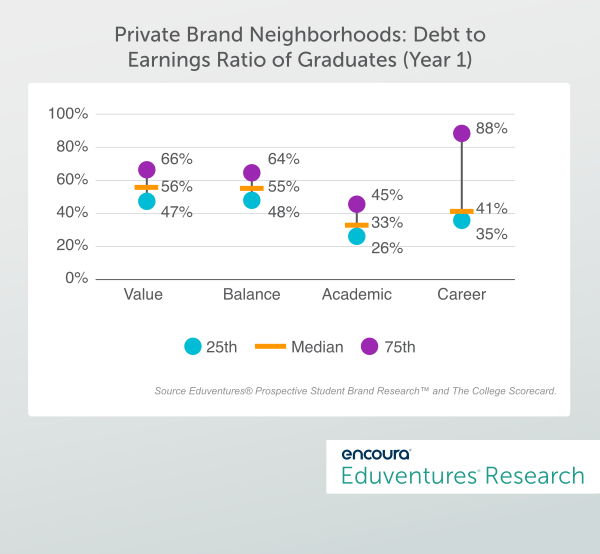
Figure 1.
Three observations from Figure 1 include:
- Students who can attend an institution in the ACADEMIC neighborhood will leave school with the lowest debt burden compared to their earnings (33% median). But, these are selective institutions that most students will not realistically be able to attend.
- Consider the range, not just the median. At the 75th percentile, some CAREER institution graduates face debt equal to 89% of first-year earnings — revealing that even “strong outcomes” neighborhoods can harbor hidden risks at specific institutions.
- Where there is “hidden risk” there is also “hidden value.” Among the brand neighborhoods, VALUE and BALANCE institutions struggle to keep up with ACADEMIC or CAREER institutions. But top VALUE and BALANCE performers are nearly as strong as ACADEMIC institutions. And they far outpace the poorest performers in the CAREER neighborhood.
What does this mean for institutions?
The grass looks greener on the other side of the fence. Institutions might envy the outcomes of ACADEMIC or CAREER institutions, but they cannot truly emulate those outcomes without the endowment resources, selectivity, or sharp career connections of these institutions. The better choice is not to look over the fence; instead, look in your own backyard. If you build best-in-class outcomes for the students you serve, you will stand out.
Shared Leadership Is Essential to Enrollment Success
By: Emily Ross
In 2025, I learned more about the growing importance of shared leadership for enrollment teams — a reflection of how essential and complex the enrollment function has become.
This summer, I had the privilege of interviewing enrollment leaders about the future of the profession for the Eduventures Enrollment Management Maturity Model. These conversations revealed that mature teams are often operating under a shared leadership approach. As VPEM roles become increasingly embedded in executive infrastructure, the complexity of the work requires shared ownership, collaboration across functions, and leaders at multiple levels keeping momentum.
From the ground up, mature enrollment teams understand strategy. Middle managers keep daily operations moving and are empowered to lead across the aisles while keeping sight of big-picture needs. This shared approach requires leaders to rethink the strengths of their teams, how they approach talent development and onboarding, and even the rhythms of everyday staff meetings and connection points.
At Eduventures Summit in June, speaker Clint! Runge highlighted how different generations approach leadership in Figure 1.
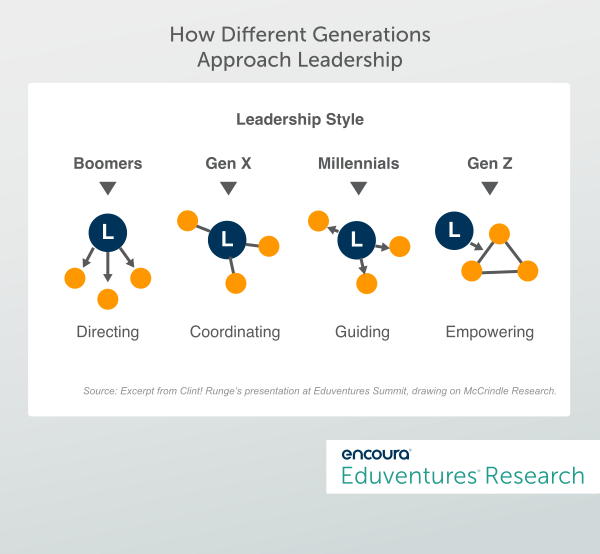
Figure 1.
According to this model, Gen X and Millennials tend to favor collaborative, less hierarchical leadership styles, while Gen Z gravitates toward an “Empowering” approach. As enrollment teams welcome more Gen Z staff, generational research suggests the field is shifting toward shared leadership both by necessity and by the natural inclinations of the workforce. This generation embraces many of the core elements of shared leadership — visibility into the big picture, transparency around strategy, and collaboration.
Given these trends, I expect this approach to expand across enrollment units. In a year of heightened visibility and pressure, shared leadership stands out as the model that can sustain the work ahead. It isn’t just emerging; it’s becoming essential to enrollment success on today’s campuses.
